A customer emails about a bag of coffee that tastes off or slightly fermented. On its own, it’s a small complaint, but the quality analyst needs to answer quickly about the coffee quality, i.e. which roast batch the bag came from and the total deliveries from that batch. That is hard to do when stock is spread across three systems: the retail counter sells from one stock count, wholesale accounts are tracked in a separate spreadsheet, and the online store relies on Shopify to show availability. Each system holds its own version of stock, and none of them are linked to the customer complaint about the batch quality. That gap within the systems turns a small complaint into a slow investigation.
Managing inventory and lot traceability in real time is not just about recording stock. It’s about knowing where every lot is so that the quality analyst can see what is available, where it sits, and where it went. Keeping coffee roaster lot traceability records in a unified platform helps coffee businesses identify the source and make decisions accordingly.
Why Distribution Needs a Single Source of Stock
When a roastery sells through a single channel, it’s easy to fetch the complete details of inventory and warehouse. A bag sold through the online store and a bag sold to a wholesale account are taken from the same physical stock, but if the systems’ tracking is not connected, each channel operates on its own assumptions.
The business faces greater risk. IHL Group’s 2026 Inventory Distortion Study found that the global cost of inventory distortion, out-of-stocks and overstocks combined, reached $1.7 trillion in 2026, equal to 6.2% of global retail sales, nearly two-thirds of that figure. For a roaster running multiple channels with disconnected counts, replacing them with a unified platform helps coffee businesses efficiently manage inventory and lot traceability.
Why Lot Traceability Isn’t Optional Once You’re Shipping Beyond Your Own Counter
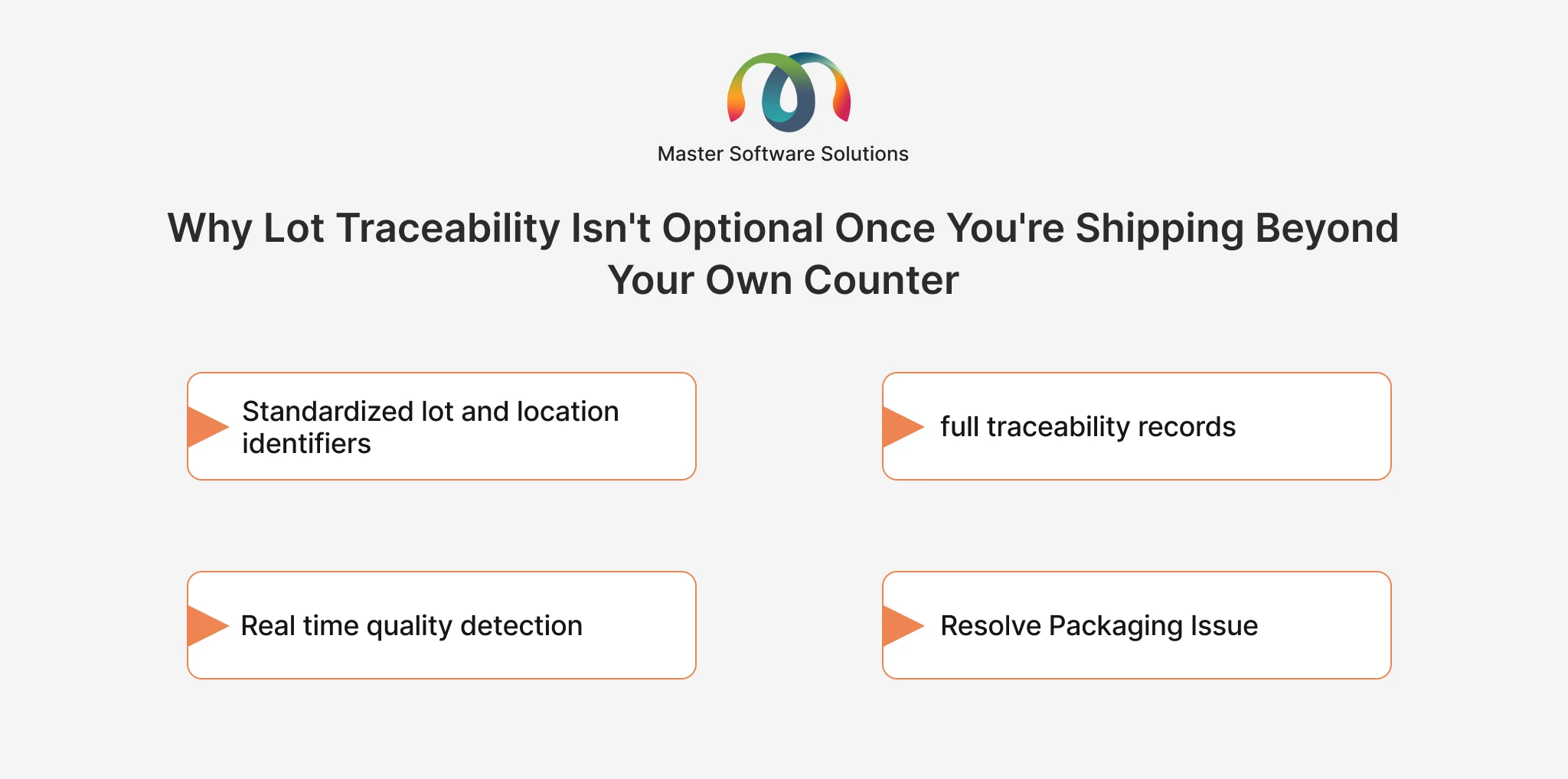
- Lot traceability plays a significant role for coffee roasters selling coffee through more than one channel. If a batch has a quality defect, a packaging issue, or a customer complaint, the question is no longer just “what happened” but “who else has this lot?”
- The FDA’s Food Traceability Rule (FSMA 204) shows where the standard is heading. Businesses must assign a unique Traceability Lot Code at key production points and produce full traceability records within 24 hours.
- Standardized lot and location identifiers are helpful for fast stock allocation. Without a standard, it needs to be rebuilt from invoices and memory. The same clean data is what makes AI in coffee operations useful for real-time predictions and stock records.
- Every batch needs a lot number to connect between systems. The same lot number means the same thing on a wholesale invoice, an e-commerce order, and a retail sale.
What Breaks When Inventory and Traceability Live in Separate Systems
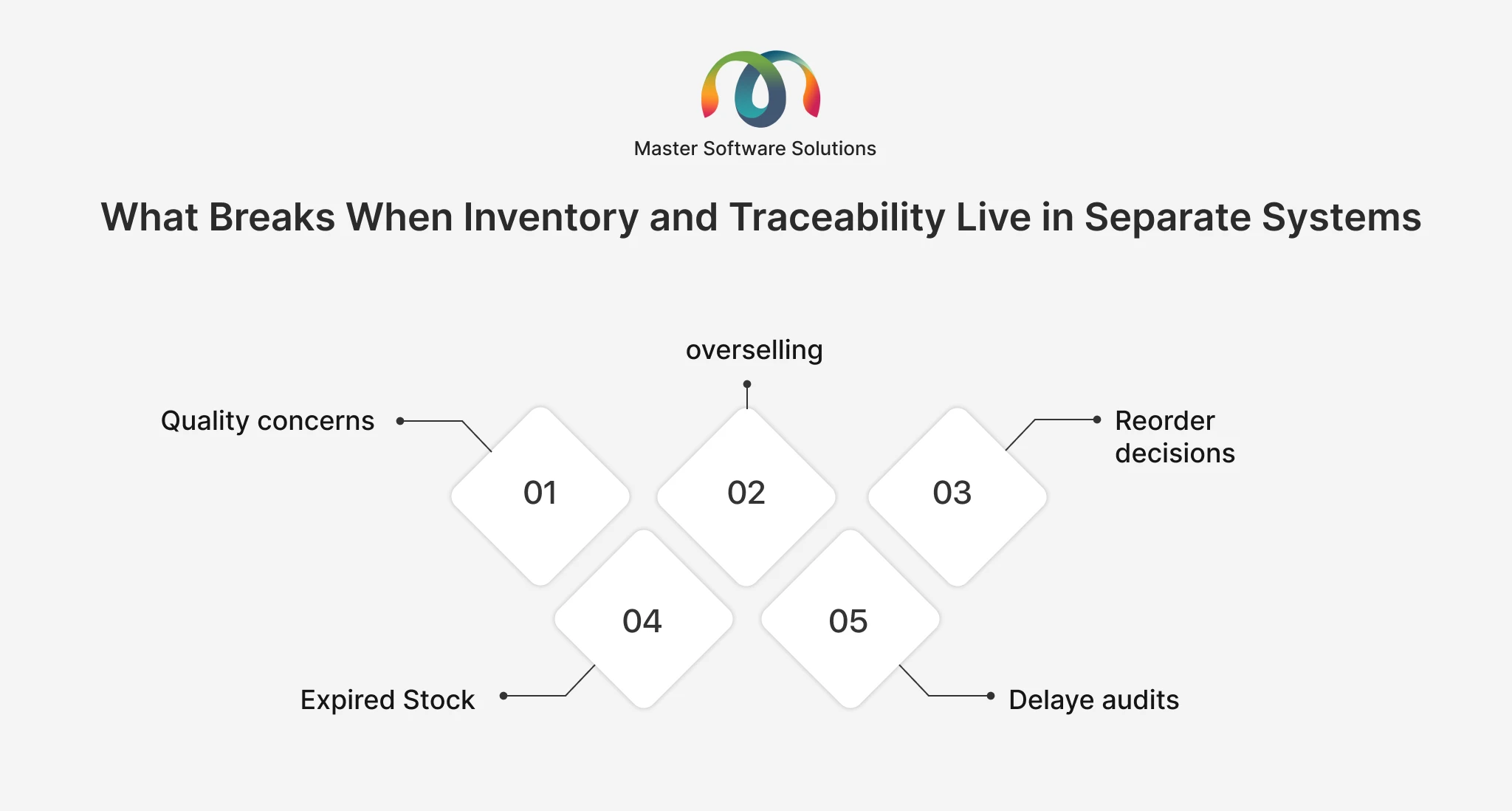
- A quality concern or recall takes hours instead of minutes to resolve. This is because tracing a single roast batch back through sourcing, roast date, and delivery requires manual checking, instead of pulling one record. To fix this, recall management software is greatly effective.
- Overselling becomes routine, not rare. The online store and the warehouse keep separate stock counts, so the same last bags of a roast can be sold to a wholesale account and an online customer at the same time.
- Reorder decisions rely on guesswork. Without one current view of stock, you buy green coffee on estimates, which means running out or overbuying.
- Expired stock goes unnoticed until it’s a write-off. Lot and roast-date data sitting apart from inventory counts means nobody catches a batch passing its best-by window before it’s too late.
- Audits take days instead of hours. When coffee traceability data isn’t tied to inventory records, tracing a batch’s origin and destination means reconstructing it by hand instead of running a report.
Building Inventory and Traceability as One System
The fix is a coffee ERP software where lot tracking is not a separate traceability tool. Automated lot traceability for FDA food safety compliance shows how this works in practice inside Odoo. It comes with automatic lot assignment, full forward and backward traceability, and records retrievable in a few minutes instead of reconstructed under pressure.
With Odoo ERP, inventory and traceability stay in sync to provide real-time data that helps businesses move forward with the right numbers for enhanced efficiency and productivity.
Conclusion
When you roast and distribute, inventory and lot traceability only work if they run on one shared record. Every roast batch gets a lot number when it is produced, and that number follows the coffee into every sale, whether it goes through the retail counter, a wholesale account, or the online store. The final result is accurate inventory and complete traceability in just a few minutes.
Odoo serves as a practical way to run this for small and mid-sized coffee businesses. Manufacturing orders and bills of materials (BoM) can turn green coffee into roasted batches, so each roast is recorded as it happens. Expiry dates, multiple warehouses, point of sale, and eCommerce all encapsulate the same stock, which cuts overselling due to separate counts. It provides growing roasteries with inventory, manufacturing, sales, or accounting for desired outcomes.
Master Software Solutions offers coffee ERP software that encapsulates the data in a unified place without manual intervention. Track inventory and batches in one system to get real-time records without complexity.