Imagine a coffee roasting team handling different tools for every process. Procurement runs in one tool, roasting schedules in another, packaging follows its own workflow, and finance is handled in a separate tool. Every process, from sourcing, pulping, drying, roasting, packaging, dispatching & distributing, ends up scattered across different tools. Keeping it all in sync leads to inconsistent roasting and delayed shipments. That’s exactly where a coffee roasting ERP system comes in.
A coffee roasting ERP is a single, connected platform that manages every stage of coffee production, from bean sourcing to dispatch, on one system. Let’s explore the features of the coffee roasting ERP system.
Key Features of a Coffee Roasting ERP System
There are some common key features designed specifically to address the everyday challenges of running a roastery:
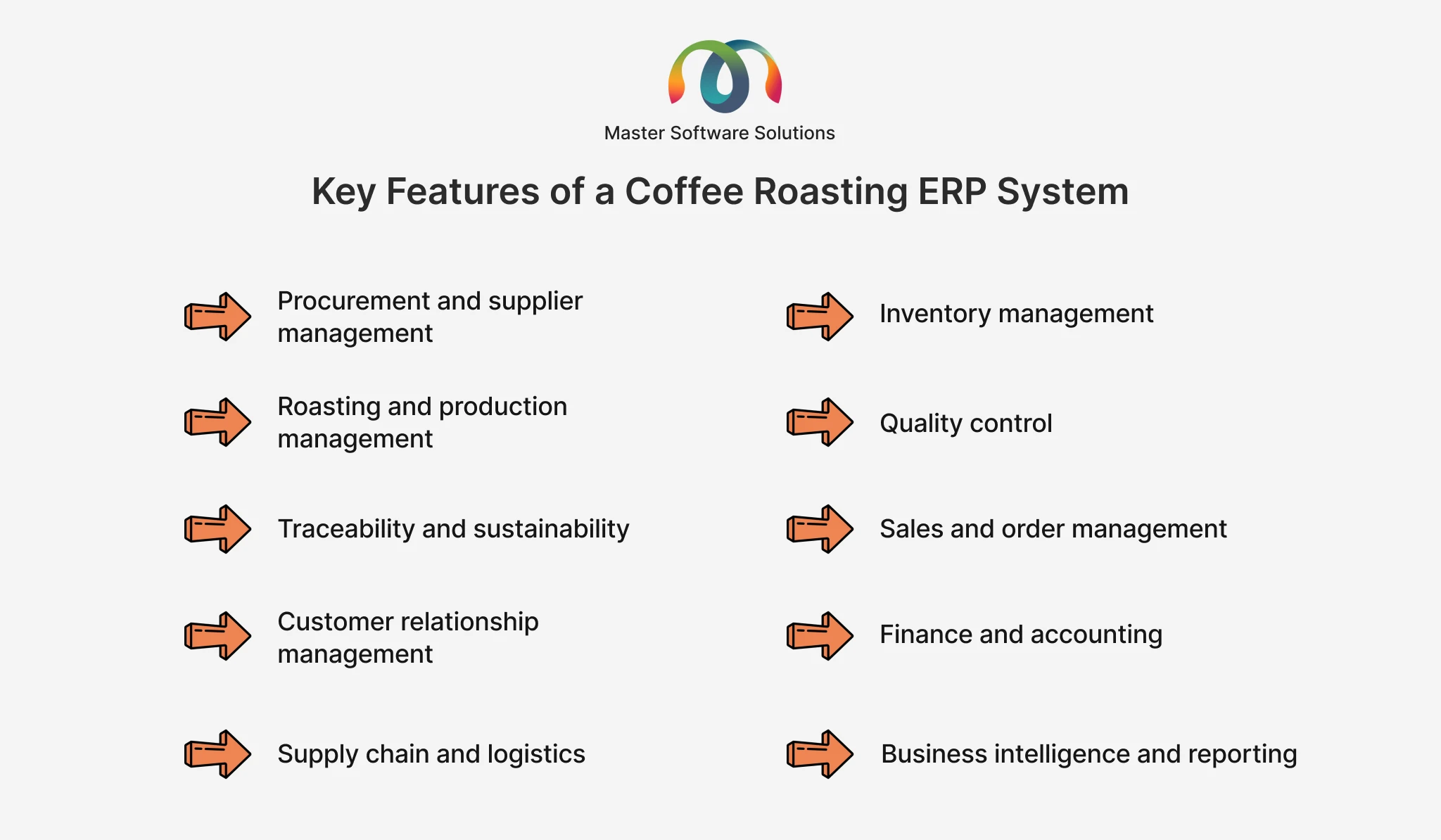
Procurement and supplier management to track supplier performance, manage POs, & negotiate pricing with vendors.
The procurement process involves sourcing green coffee beans, flavoring ingredients, packaging materials, tracking supplier performance, managing POs, & Negotiate pricing with vendors.
The structural procurement & supplier management process includes:
- Track supplier performance – ERP systems track how reliably each vendor delivers green coffee on time, in the right quantity, and at the promised quality, so you know which suppliers you can depend on.
- Manage POs: Create, send, and track purchase orders for green beans, packaging, and equipment, so every order is documented and nothing gets missed or duplicated.
- Negotiate pricing with vendors: Comparing past purchase history & market rates to negotiate fair, consistent pricing with suppliers, rather than paying inconsistent rates order to order.
- High-quality raw material delivery: Ensures green coffee beans, flavoring ingredients, and packaging materials arrive on time and meet quality standards.
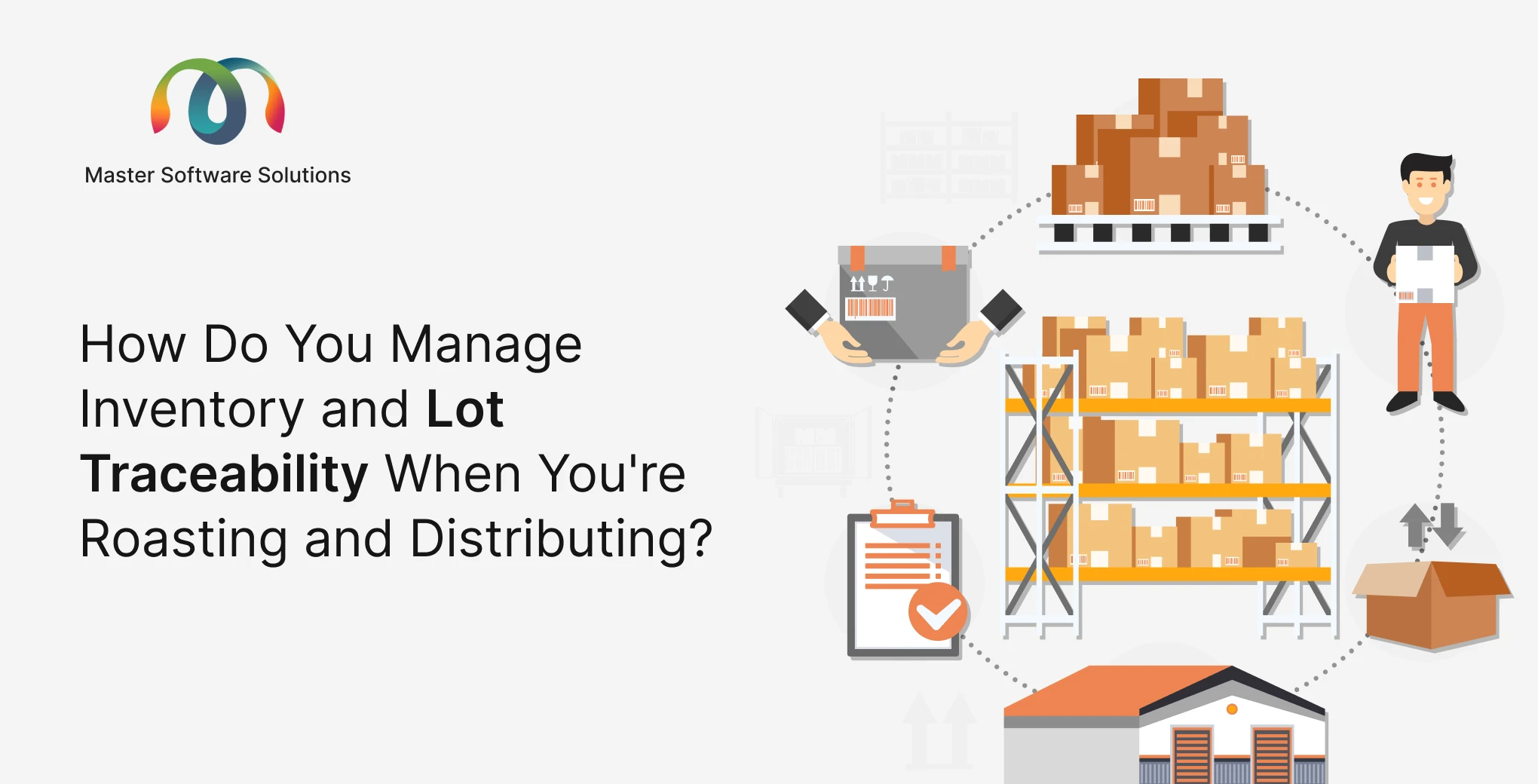
Inventory management for real-time visibility into raw beans, roasted beans, finished goods, & packaging materials.
Inventory involves tracking stock of green beans, roasted coffee, and packaging materials, down to the lot and origin. This visibility helps prevent stockouts during production, reduces spoilage from aging beans, and keeps FIFO rotation on track, so every cup reflects freshly roasted, high-quality coffee.
The structural inventory management process includes:
- Roasted beans tracking – Monitor roasted coffee inventory separately from green beans to know exactly what’s ready for packaging or sale.
- Finished goods visibility – Keep track of packaged, ready-to-ship products across all your SKUs, so stock levels stay accurate for fulfillment.
- Packaging materials tracking – Monitor bags, labels, and other packaging supplies, preventing production delays caused by running out of materials.
- FIFO/LIFO support – Automatic management of batches based on your preferred method to ensure older stock doesn’t sit too long and lose freshness.
- Expiry tracking – Get alerts on beans or materials nearing their best-use date, reducing waste from expired stock.
- Batch management – Track inventory by specific batch or lot, keeping quality and traceability data linked to every business.
- Automated reordering – Set reorder points so the system triggers new purchase orders before stock runs critically low.
Roasting and production management to track every production stage, manage recipes & formulations, & get complete control over the roast profile.
Roasting and production management ensure every batch, from procurement to package follows the exact roast profile, temperature curve, and blend formula to maintain the consistency of flavors.
The structural roasting & production management process includes:
- Tracking every production stage – From roasting, grinding to packaging, you know exactly where each batch stands at any point.
- Managing recipes & formulations – Store exact blend ratios and ingredient proportions for every product, ensuring the same recipe is followed every time it’s produced.
- Complete control over roast profile – Set and monitor temperature curves, time settings, and rate of rise (ROR) for each roast, so flavor stays consistent batch after batch.
- Batch size and equipment scheduling – Plan production runs around available roasting equipment and batch capacity, avoiding bottlenecks.
- Consistency, quality, and traceability – Link every production stage to its source lot and roast data to ensure quality issues can be traced.
- Recipe management – Create a final recipe of blend formulas that can be reused, scaled, or adjusted without recalculating proportions manually.
- Production cost tracking – Monitor the cost of labor, energy, and raw materials to get a clear picture of production expenses per product.
Quality control for tracking of lab testing results, cupping scores, & inspection data, & managing compliance-related documents.
Quality control shows every batch meets the flavor, aroma, and moisture standards your coffee is known for. It analyzes issues through cupping scores and lab testing before a bad batch reaches packaging or the customer. According to Gartner research from 2020, poor data quality costs organizations at least $12.9 million a year on average. Trusted, high-quality data is key to enabling a data-driven enterprise to produce business results.
The structural quality control process includes:
- Lab testing results – Record and store moisture content, density, and other lab measurements for each batch.
- Cupping scores – Log tasting evaluations for aroma, acidity, body, and flavor against every batch, building a quality history over time.
- Data inspection – Capture defect counts, screen size, and visual inspection at intake and after roasting.
- Compliance-related documents – Store certifications, audit records, and food safety documentation in one place
- Meeting quality parameters – Set defined thresholds for flavor, aroma, and moisture, so every batch is measured against the same standard.
- Batch isolation on failure – Automatically flag and separate the batch that doesn’t meet quality checks to maintain the quality standard.
- Audit and certification readiness – Keep documentation organized to pass inspections and renew certifications without last-minute chaos.
Traceability and sustainability tracking trace coffee back to its origin, ensuring you identify the source of the problem.
Traceability and sustainability tracking let you trace every batch of coffee from origin. if a quality issue comes up, you can quickly identify where it started, whether at the farm, during shipping, or in production.
More and more, people are investing in sustainable companies as sustainability is a prime concern. Whether it’s an investor, a customer, or in a partnership capacity, people want to do business that have a solid ESG strategy and put some good out into the world. It’s found that the best ESG performers see faster growth and are reported to have at least 10% higher company valuations.
The structural Traceability and sustainability tracking process includes:
- Tracking coffee back to its origin – Link every batch to its exact farm, region, and lot, so the full journey of the coffee is documented from source to cup.
- Identifying source problem – Identify the source of the quality or compliance issue. Whether it’s from the farm, during shipping, or in roasting.
- Farm and certification records – Store details on the coffee farm, growing practices, and certifications (organic, fair trade, direct trade) tied to each lot.
- Shipping and production history – Track the movement of coffee from origin through import, storage, and production, keeping a complete timeline for every batch.
- Labeling support – Pull accurate origin and certification data directly into product labels.
- Ethical sourcing documentation – Maintain records that demonstrate responsible sourcing practices.
- Customer trust-building – Give real-time visibility to customers from origin to delivery to maintain transparency.
Build a Transparent, Sustainable Coffee Supply Chain! Turn traceability data into verified sustainability, from farm to cup, and build stronger trust with every stakeholder. Talk to our ERP experts
Sales and order management to manage quotations, sales orders, pricing tiers, discounts, and order status.
Sales and order management bring every order, quotation, and pricing detail into a unified system. This helps roasters fulfill orders on time and keep stock available across wholesale, retail, and online channels without juggling separate tools.
The structural Sales and order management process includes:
- Managing quotations – Create and send price quotes to wholesale or bulk buyers before an order is confirmed, keeping the sales process organized.
- Tracking sales orders – Track every confirmed order from placement to fulfillment, so nothing gets missed or duplicated.
- Pricing tiers – Set different pricing levels for retail customers, wholesale accounts, or subscription buyers based on customer type.
- Discounts – Apply and track promotional or bulk discounts without manual price adjustments on every order.
- Order status – Give visibility of the order status from processing to shipping.
- Timely order fulfillment – Coordinate order processing with production and inventory
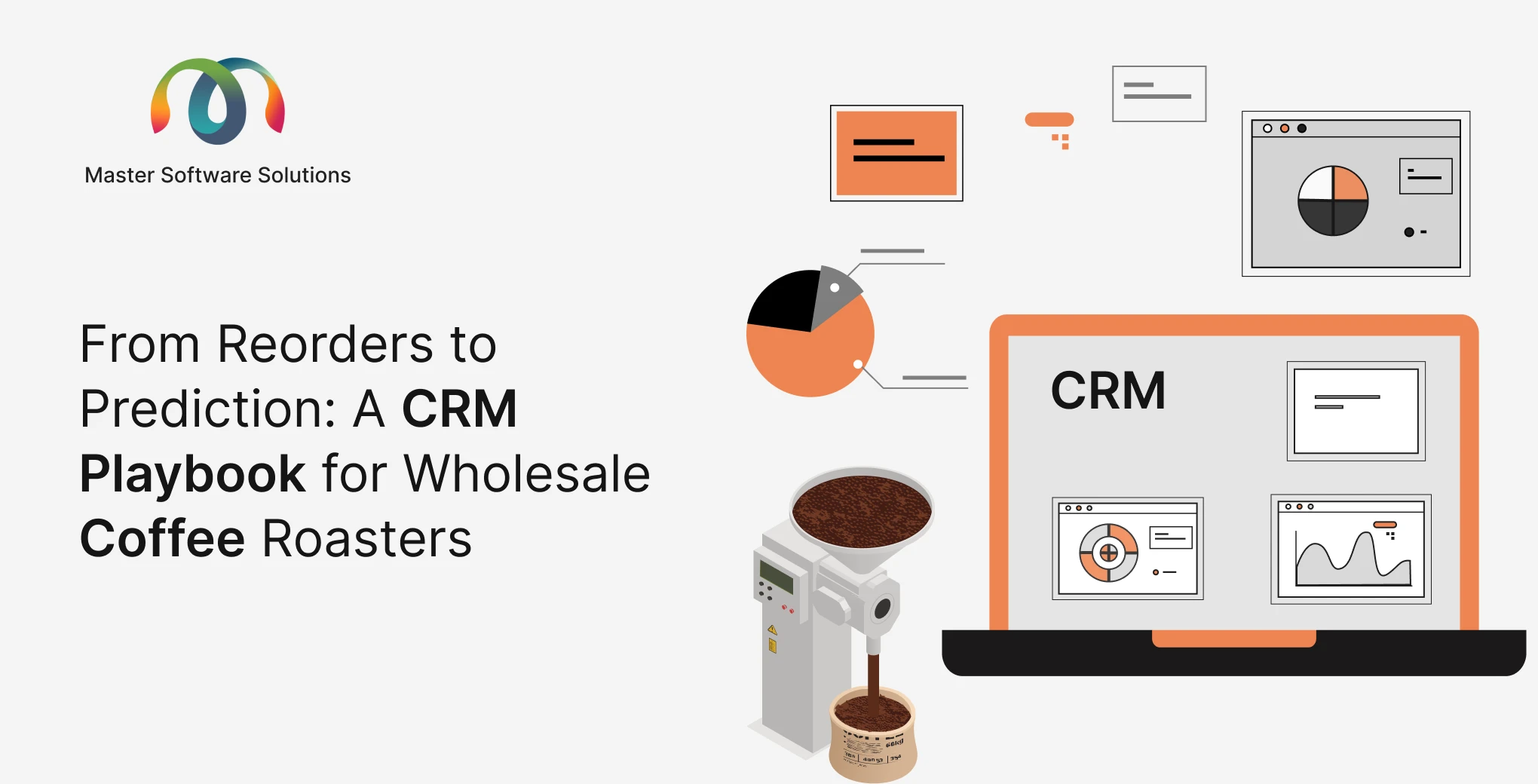
Customer relationship management to manage and track your customer profiles, order history, recurring purchases, and interactions.
Customer relationship management keeps every customer interaction, from managing customer profiles, order history, and recurring purchases to personalized marketing, organized in one place.
The structural Sales and order management process includes:
- Customer profiles – Maintain detailed records for each customer, including contact details, preferences, and account type (B2B or B2C).
- Order history – Access a complete record of past purchases for every customer.
- Recurring purchases – Track subscriptions or repeat orders automatically.
- Loyalty programs – Manage customer outreach and reward programs directly tied to purchase history.
- Feedback tracking – Capture customer feedback systematically, rather than relying on scattered emails or calls.
- B2B and B2C tracking – Handle wholesale accounts and individual retail customers within the same system, with relevant details for each.
- Personalized marketing and retention – Use purchase and interaction data to tailor offers and outreach that keep customers coming back.
Finance and accounting to automate finance and accounting operations and generate your financial reports.
Finance and accounting involve billing, invoicing, tax calculations, bank reconciliation, and expense tracking. Also, automatically generate financial reports, including cash flow and balance sheets, for budgeting, pricing decisions, and compliance with financial regulations.
The structural finance and accounting process includes:
- Automating finance and accounting operations – Reduce manual data entry and repetitive tasks by handling routine financial processes.
- Generating financial reports – Produce reports on demand instead of compiling data from multiple spreadsheets or tools.
- Billing and invoicing – Automatically generate and send invoices for wholesale orders, retail sales, or subscriptions.
- Tax calculations – Apply correct tax rates automatically across transactions, reducing errors in compliance.
- Bank reconciliation – Automatically match transactions with bank records.
- Expense tracking – Monitor the cost of green coffee purchases, packaging, and operational expenses in one place.
- Regulatory compliance – Keep financial records organized and audit-ready, supporting compliance with financial regulations.
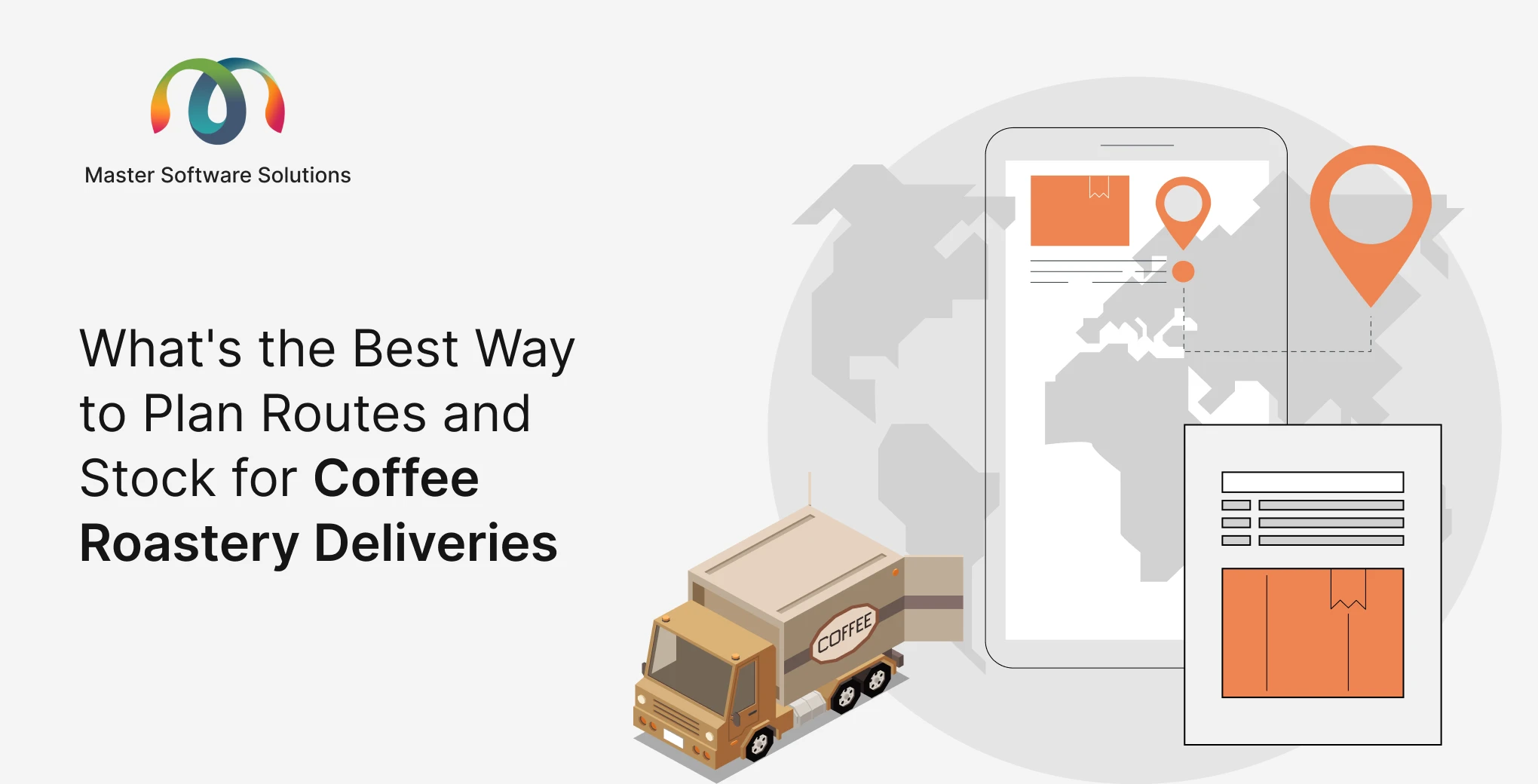
Supply chain and logistics management to get end-to-end visibility of the coffee movement from procurement & production to shipments.
Supply chain and logistics management offers end-to-end visibility of the coffee movement from procurement & production to shipments. Also, the introduction of AI in the coffee supply chain adds value at different touchpoints like optimizing delivery routes, transportation, and storage to cut costs and reduce delays.
The structural finance and accounting process includes:
- End-to-end visibility – Track coffee at every stage, from raw bean procurement through roasting and into shipping, within a single system.
- Procurement to production – Connect incoming green coffee shipments directly to production planning
- Shipments – Monitor outbound deliveries in real time
- Delivery route and transportation optimization – Plan efficient delivery routes to get roasted coffee to customers quickly
- Third-party logistics monitoring – Keep visibility over external logistics partners to meet delivery commitments.
Business intelligence and reporting to track your business KPIs and draft strategies to improve your operations and expand services.
Business intelligence and reporting track your business KPIs and draft strategies to improve your operations and expand services. It involves monitoring sales performance, inventory health, customer trends, and operational costs to make data-driven business decisions.
The structural Business intelligence and reporting process includes:
- Tracking business KPIs – Monitor key metrics like production output, order fulfillment rates, and profit margins in one place.
- Drafting operational Strategies – Use performance data to identify inefficiencies.
- Centralized data collection – Centralizing data from procurement, production, sales, and finance into a single dashboard.
- Sales performance monitoring – Track products, channels, or customer segments that drive revenue.
- Inventory health tracking – Get visibility into stock levels, turnover, and waste trends across raw and finished goods.
- Customer trend analysis – Understand buying patterns and preferences across B2B and B2C customers.
- Operational cost monitoring – Keep track of costs across departments to identify where efficiency can be improved.
Conclusion
The coffee business relies on consistency, freshness, and trust at every stage. Without a proper structure, even a well-run roastery can struggle to keep pace as it scales. A coffee roasting ERP system provides that structure, bringing every process, from procurement and roasting to quality control and accounting, into one connected platform. Investing in the right ERP system is a practical step toward long-term, sustainable growth for coffee businesses.
We at Master Software Solutions provide customized Odoo ERP solutions to streamline & optimize various aspects of the coffee industry, including procurement, inventory, quality control, Sales, CRM, Finance & accounting. Connect with our team today for more information.