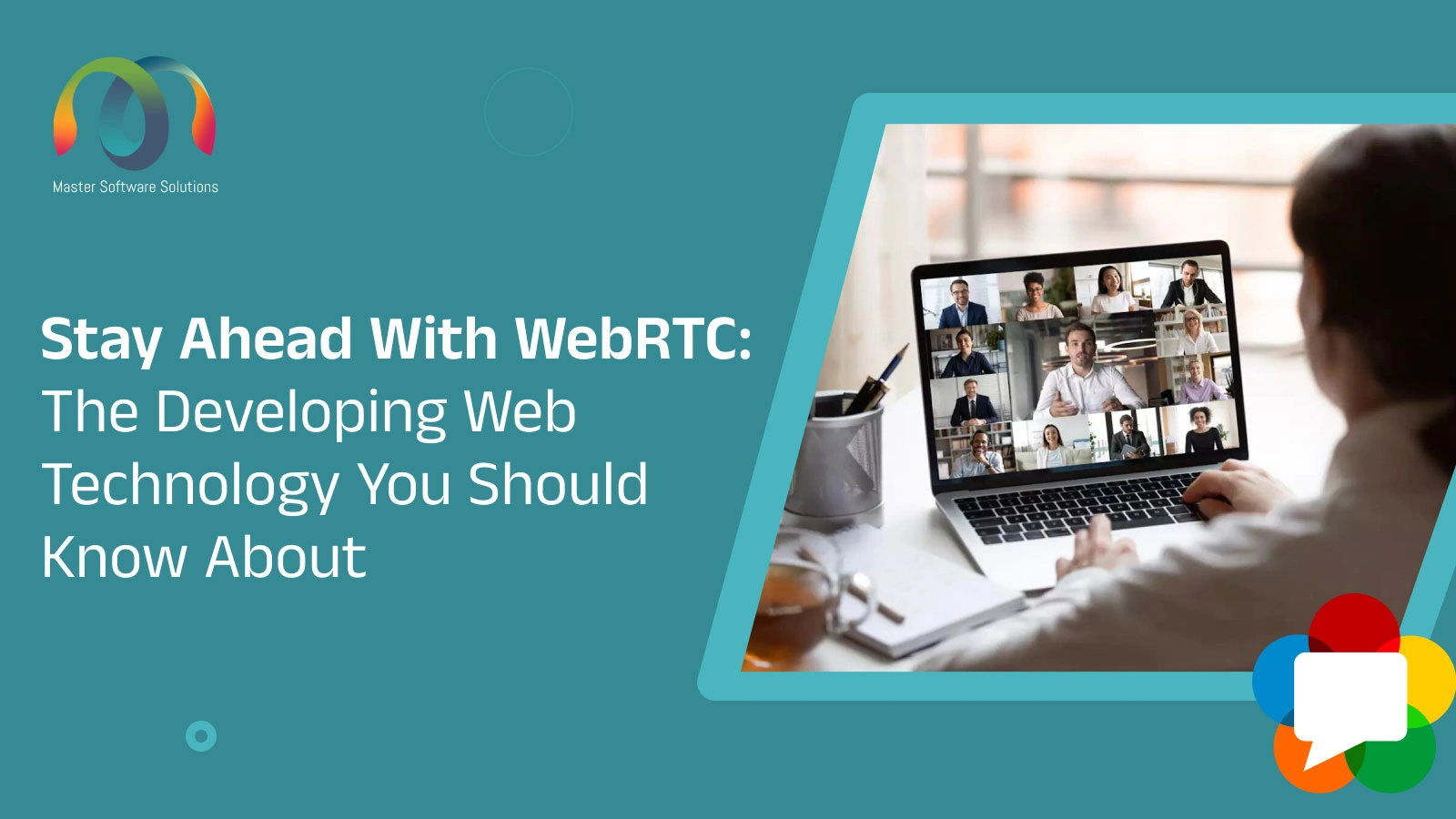
In today’s digital age, staying ahead requires keeping up with emerging technologies that redefine how we connect and communicate online. WebRTC (Web Real-Time Communication) is a transformative web technology that is changing the way we interact on the internet.
The Web has evolved dramatically, and WebRTC (Web Real-Time Communication) is one of the most exciting developments. WebRTC is revolutionising online communication and collaboration, encompassing screen sharing, file transfer, and audio and video conferencing.
What is WebRTC, and why should you care?
WebRTC is an open-source project with APIs (application programming integrations) with real-time communication over voice, video, and text capabilities between the browser and devices. WebRTC developers use these APIs to establish peer-to-peer communications between Internet web browsers and mobile applications.
As of 2024, the global Web Real-Time Communication market was estimated at USD 8687.64 million, and it’s anticipated to reach USD 58995.32 million in 2031, with a CAGR of 37.61% during the forecast years.
How did WebRTC gain prominence?
It all began with COVID-19 when people were forced to stay home due to social distancing measures. With offices closed, live concerts cancelled, and hospitals only accepting emergency patients, WebRTC emerged as a game changer. And even today, these online collaboration trends are being followed.
Let’s delve into the key aspects of this developing web technology:
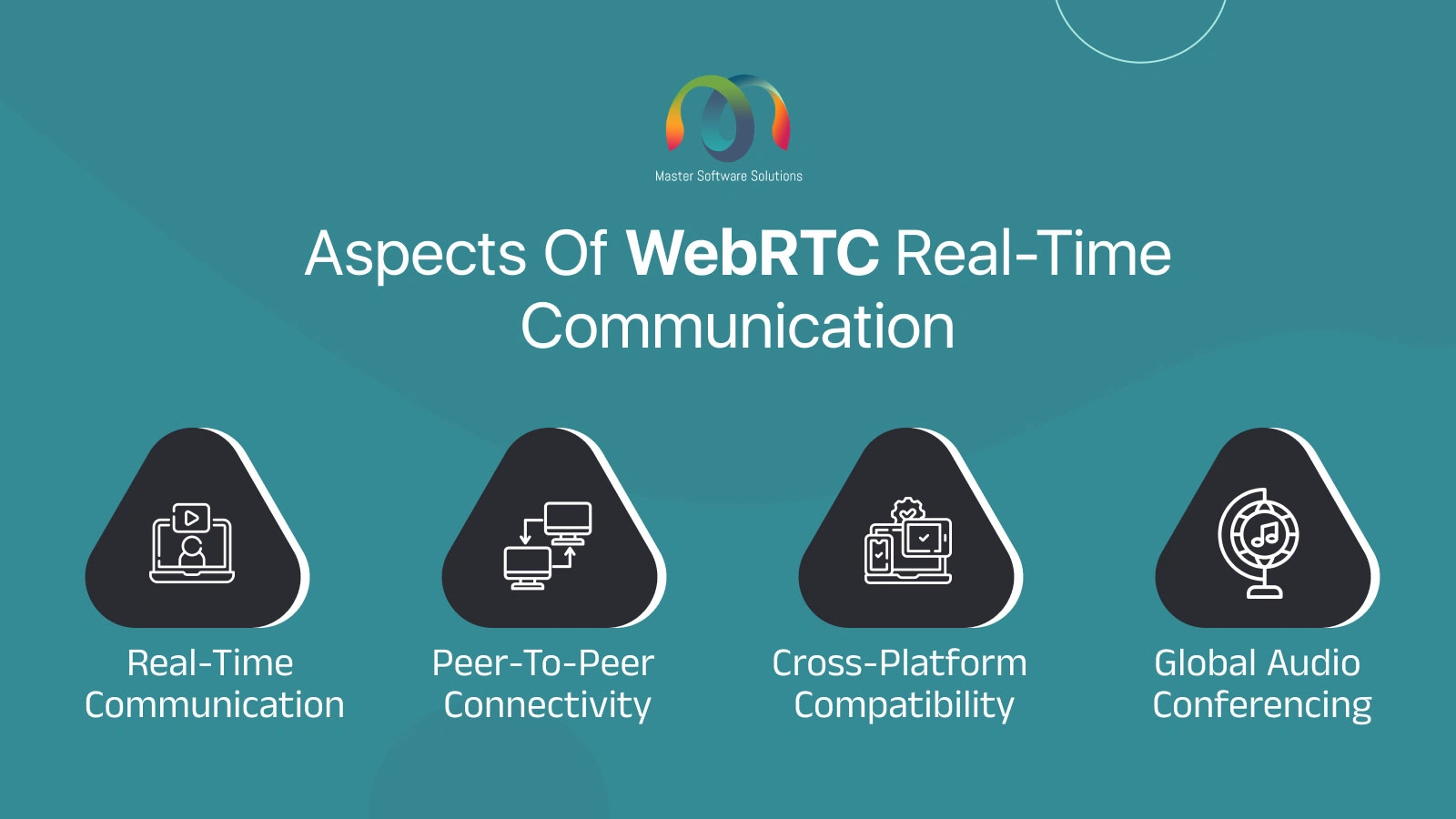
WebRTC (Web Real-Time Communication) provides features that enable seamless and secure real-time communication between web browsers and mobile devices. They allow developers to create a diverse set of innovative applications and services.
- Real-time Communication
WebRTC allows users to interact with websites instantly by enabling real-time communication within web browsers. WebRTC, in contrast to conventional APIs, is integrated into web browsers and necessitates the installation of standalone apps or plugins. This guarantees smooth communication without the need for extra setup or downloads. Online applications for gaming, live streaming, video conferencing, customer support chats, and collaborative document editing require instantaneous feedback and interaction. These apps require real-time functionality. - Peer-to-peer connectivity
WebRTC facilitates peer-to-peer communication by allowing direct data exchange directly between users’ web browsers without the need for intermediate servers. This decentralised architecture lowers latency, increases privacy, and improves reliability, making it ideal for video conferencing, file sharing, and online gaming applications. - Cross-Platform Compatibility
WebRTC ensures cross-platform compatibility, allowing real-time communication across multiple devices, operating systems, and web browsers. This universality improves accessibility and user reach, allowing consistent communication experiences regardless of device preferences. - Global Audio Conferencing
WebRTC facilitates audio conferences between users and people. Browsers can establish audio conferences directly with one another using WebRTC’s peer-to-peer communication features, eliminating the need for centralised servers. Global audio conferencing improves communication and cooperation among participants from different geographical locations, remote workers, and distributed teams.
Does WebRTC application development require technical knowledge?
Yes. WebRTC applications necessitate technical expertise, particularly in web development, networking, and real-time communication protocols. WebRTC (Web Real-Time Communication) is a free, open-source project that supports audio, video, and data in web browsers and mobile applications. Technical proficiency in real-time communication, web development, networking, security, APIs and libraries, testing, and debugging are prerequisites for employing WebRTC.
If you have these technical skills, you can develop WebRTC solutions yourself. Or, you can also opt to partner with third-party WebRTC development services, from which you can hire WebRTC developers.