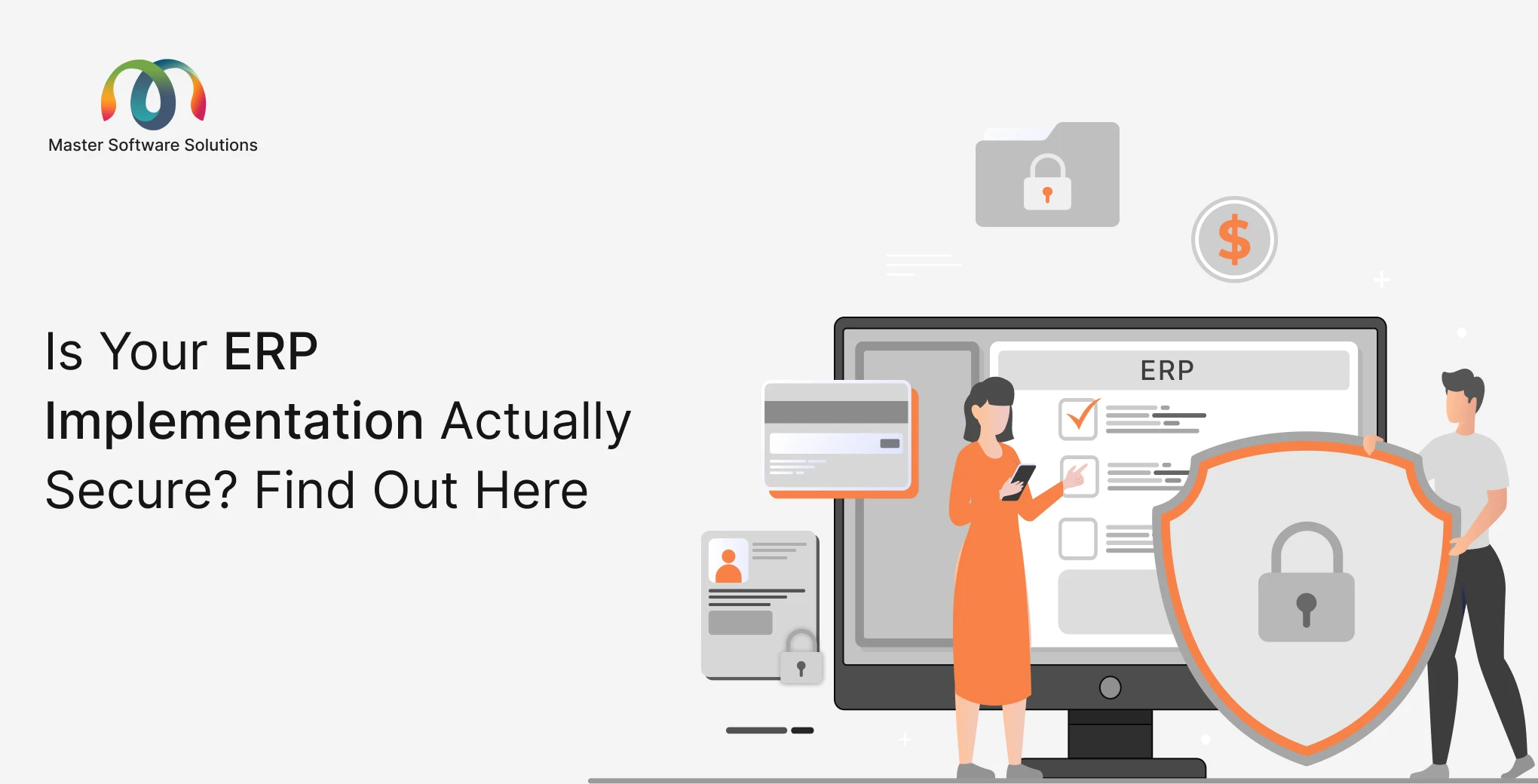
Security isn’t a feature you turn on at go-live. It’s a discipline built into every layer of your ERP implementation, and most partners aren’t doing enough of it.
What Are The Security Problem No One Talks About in ERP Sales Conversations
When businesses evaluate ERP platforms, security rarely tops the agenda. Conversations gravitate toward features, timelines, and pricing. Security, if it comes up at all, is usually handled with a reassuring wave: “Don’t worry, the platform is enterprise-grade.”
But here’s the thing; the platform being secure and your implementation being secure are two very different things.
Implementing an ERP means consolidating some of the most sensitive data your business holds: customer records, financial transactions, supplier contracts, and employee information. In Australia, that comes with specific legal obligations under the Privacy Act. Everywhere else, it carries the weight of regulatory expectations, contractual duties, and basic trust.
The software vendor secures the product. Your implementation partner secures how that product is configured, integrated, and maintained in your environment. That’s a responsibility gap that can leave your business exposed, and most companies don’t discover it until something goes wrong.
What You Should Be Asking Your ERP Partner (But Probably Aren’t)
Before you sign with any implementation partner, push beyond the standard pitch deck. Ask direct questions:
- Do you build a vulnerability management plan into every implementation, or is that an optional extra?
- How do you approach penetration testing: before go-live, after, or both?
- When a security vulnerability is discovered post-go-live, what is your process? Who gets notified, and how quickly is it resolved?
- How do you handle data residency requirements and access controls for regulated markets?
- How are third-party integrations secured?
“Vague answers should concern you. Security is too important to leave to “we’ll cross that bridge when we come to it.”
Want to know exactly how we handle ERP security for businesses in your industry? Book a no-obligation conversation with our team
Why the Responsibility Is Yours, Even When You’re Using Established Software
Many business leaders assume that choosing a well-known ERP platform transfers the security burden to the vendor. It doesn’t.
You are responsible for the data your business holds. Full stop.
Your implementation partner shapes how that data is accessed, stored, integrated, and protected. Poor configuration, inadequate access controls, untested integrations, and no plan for post-launch vulnerabilities are implementation decisions, not platform limitations.
The right partner doesn’t just deploy software. They build a security posture around it.
What is Our Security Approach
Security is one of the areas where we go beyond what most implementation partners offer, particularly for clients operating in regulated markets like Australia. Here’s what that looks like in practice:
Vulnerability Management From Day One
We build a vulnerability management plan into every implementation as a core deliverable, not an optional add-on. This means identifying risks early, defining controls, and establishing clear processes before a single line of code goes live.
Privacy Act Compliance for Australian Clients
For clients operating under Australian privacy law, we design system architecture with data residency and access controls built in from the start, not retrofitted after the fact. Your obligations under the Privacy Act are treated as requirements, not afterthoughts.
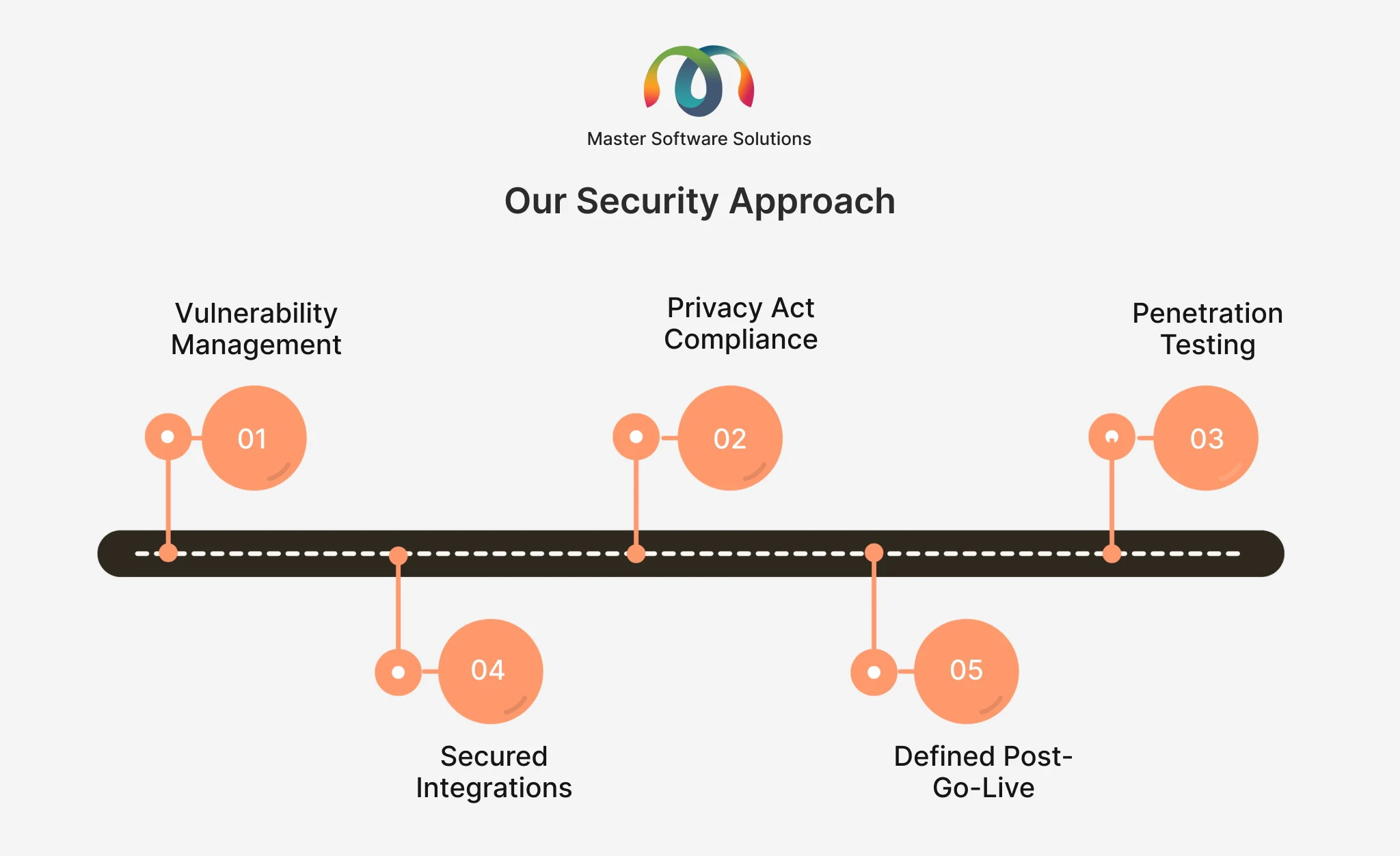
Penetration Testing, Defined and Scheduled
We work with every client to define a penetration testing approach that fits their risk profile. That might mean pre-go-live testing to validate the system before launch, post-go-live assessments to catch anything that emerged during the transition, or scheduled ongoing tests to maintain continuous assurance. You choose the model; we execute it.
Secured Integrations as Standard
Odoo provides secure API authentication for all third-party integrations, meaning external systems can only access your data with explicit authorization. We implement and verify these controls so nothing slips through the cracks during complex, multi-system rollouts.
A Defined Post-Go-Live Security Process
Our support model includes clear escalation paths and resolution timelines for security vulnerabilities discovered after launch. You’ll never be in a position of chasing a partner who doesn’t have a process, because we built the process before we handed over the keys.
Security is not something we configure once and forget. It’s an ongoing commitment, and we build that expectation into every engagement from the start.
Master Software Solutions implements Odoo ERP with a security-first approach for businesses across Canada, the U.S., and beyond. If you’re evaluating ERP partners and want to understand what a rigorous security framework looks like in practice, we’d love to talk.
Frequently Asked Questions
Q1. Is ERP security the responsibility of the software vendor or the implementation partner?
A1. Both, but in different ways. The software vendor is responsible for securing the platform itself: the code, the infrastructure, and the product-level security features. Your implementation partner is responsible for how the platform is configured, how data is structured and accessed, how integrations are secured, and how vulnerabilities are managed once the system is live. If your implementation partner isn’t actively owning that second set of responsibilities, there’s a gap in your security posture.
Q2. What is penetration testing, and does my ERP implementation really need it?
A2. Penetration testing (or “pen testing”) is a structured process where security professionals attempt to identify and exploit vulnerabilities in your system before a malicious actor does. For ERP implementations, this is particularly valuable because these systems sit at the centre of your business data. Whether you need it, when you need it, and how often depends on your industry, regulatory environment, and risk appetite. We help clients define the right approach rather than applying a one-size-fits-all answer.
Q3. What does a vulnerability management plan actually include?
A3. A vulnerability management plan defines how your organisation identifies, assesses, prioritises, and addresses security vulnerabilities over time. For an ERP implementation, this typically includes: a risk assessment of the system architecture, a process for monitoring and applying security patches, defined escalation paths when a vulnerability is discovered, and scheduled review points to reassess as the system evolves. We build this plan into every engagement so clients aren’t left creating it from scratch post-launch.
Q4. How do you handle security for Australian businesses under the Privacy Act?
A4. The Privacy Act imposes specific obligations on how personal information is collected, stored, accessed, and disclosed. When implementing an ERP for Australian clients, we design the system architecture to satisfy these obligations, including data residency considerations (ensuring data is stored where required), role-based access controls (ensuring only authorized users can access sensitive records), and audit logging (maintaining a trail of who accessed what and when). We treat Privacy Act compliance as a design requirement, not a compliance checklist item.
Q5. What happens if a security vulnerability is discovered after my ERP goes live?
A5. This is one of the most important questions to ask any potential implementation partner — and one of the most commonly overlooked. Our post-go-live support model includes a defined process: clear escalation paths, communication protocols, and committed resolution timelines. When a vulnerability surfaces, you’ll know exactly who to contact, what to expect, and when it will be resolved. You won’t be left wondering.
Q6. We’re using a well-known ERP platform; isn’t that enough protection?
A6. Not on its own. The platform vendor is responsible for the product’s security, but the security of your specific implementation depends on how it’s configured, integrated, and maintained. Two businesses can run the same ERP platform with vastly different security outcomes depending on who implemented it and how. Platform security is the floor, not the ceiling.
Ready to work with an ERP partner that takes security as seriously as you do? Get in touch with our team today.