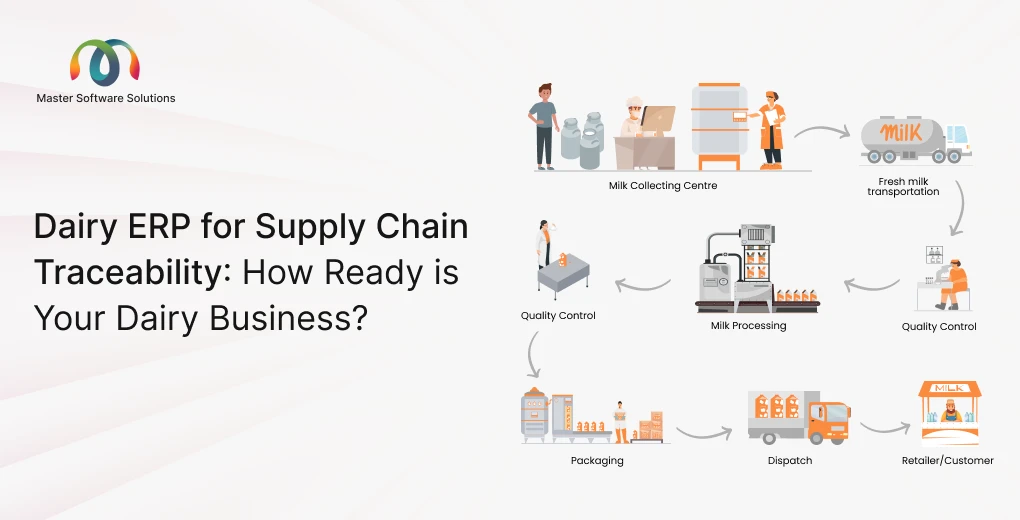
Traceability has become a serious topic for dairy businesses. It is no longer just about meeting regulatory compliance. Customers, retailers, and regulators now expect full visibility into the source of dairy products and the way they travel through the supply chain.
Yet many dairy companies still rely on disconnected systems and manual tracking. When the issue arises, finding the source can take hours or even days. This delay increases risk, cost, and pressure on the business.
This is where dairy ERP software plays a key role. It brings all supply chain data into a system, making traceability faster, clearer, and more reliable. The real question here is, how ready is your dairy business to meet today’s traceability needs?
Table of Contents
Understanding supply chain traceability in the dairy industry
Traceability refers to knowing the source of dairy products, where they come from, and where they end up. It covers every step, from milk collection to processing and delivery. When something goes wrong, traceability helps you find the cause quickly.
It starts with milk procurement. Details like farmer information, collection centers, and milk quality need to be captured accurately. When this data is stored in one system, it becomes easier to manage quality and accountability.
Batch and lot tracking are central to traceability. Each batch should be connected to its raw milk source, processing details, and finished products. A dairy ERP automates and ensures this connection.
Quality testing is another critical area. Test results must be linked to specific batches, ensuring that non-compliant products do not move forward. With a dairy ERP system, this data is reliable in real-time and is not buried in spreadsheets.
Many businesses struggle because data is scattered across multiple systems. A dairy ERP brings everything together, making traceability faster, simpler, and audit-ready at all times.
Regulatory and market pressures shaping dairy traceability
Food safety regulations are becoming stricter around the world. Governments want dairy companies to know exactly where their products come from and how they are handled. Traceability is no longer optional; it is a basic requirement.
Regulations, such as FSMA in the US, FSSAI in India, and EU food safety laws, require proper tracking and recordkeeping. Export markets have even higher expectations, especially for quality and safety data.
Today’s customers want more transparency. They care about product safety, quality, and origin. Simple labels are no longer enough. Retailers also expect strong traceability systems from their dairy partners. They want quick answers during audits, complaints, or recalls. If a supplier cannot provide clear data, retailers may look for alternatives.
When traceability is weak, small issues can quickly escalate into major problems. A delay in identifying the source of contamination can result in product recalls. This increases cost and operational stress. Non-compliance can also damage brand trust. Regulatory penalties, rejected shipments, and lost business opportunities are common risks that organizations face. In the long run, poor traceability can hinder growth and reputation.
A dairy ERP system helps businesses stay prepared for both regulations and market demands. It keeps data organized, accurate, and easily accessible. This makes audits, inspections, and recalls faster and less risky.
Role of dairy ERP in enabling end-to-end traceability
End-to-end traceability in the dairy supply chain requires complete visibility across procurement, production, quality, and distribution. A dairy ERP acts as a central system that connects all these stages. It ensures that data flows smoothly from milk collection to final dispatch, without gaps or manual intervention.
How is a dairy ERP different from a generic ERP?
Generic ERP systems are built for broad industries and lack dairy-specific workflows. They often struggle with handling milk procurement, perishability, and quality parameters unique to dairy operations.
On the other hand, dairy ERP software is designed for daily dairy operations. It understands milk collection cycles, quality testing at intake, yield variations, and shelf-life constraints. This industry-focused approach ensures that the traceability is more accurate and practical.
Dairy ERP modules that support traceability
The dairy ERP system provides multiple business applications or modules that enable dairy businesses to automate, streamline, and optimize operations, ensuring end-to-end product traceability. Dairy ERP system modules for traceability.
Procurement and milk collection
Milk collection is the starting point of traceability. A dairy ERP records farmer details, collection center data, milk quantity, and quality parameters at the time of collection. This data is automatically linked to future batches and products. If an issue occurs later, businesses can trace it to the exact source without delays.
Production and batch management
During processing, milk is converted into multiple products. A dairy ERP tracks each production batch, linking it to the raw milk used, process conditions, and output quantities. This batch-level visibility allows both backward and forward traceability. Businesses can quickly identify which products are affected and where they were distributed.
Quality management and testing
Quality testing happens at multiple stages, from milk intake to finished goods. A diary ERP captures test results and links them directly to batches and lots. If a batch fails quality checks, the system can automatically block it. This prevents non-compliant products from moving forward and reduces recall risks.
Inventory and logistics
Dairy products are highly perishable, making inventory tracking critical. A dairy ERP monitors stock by batch, location, and expiry date. It also monitors the product’s movement during storage and transport. This ensures that traceability continues even after production, upto the point of delivery.
Real-time data integration
Real-time data integration is one of the biggest strengths of a dairy ERP. Information from procurement, production, quality, and logistics flows into a single system, eliminating manual data entry and system silos. As a result, traceability reports, audits, and recalls can be handled quickly and with confidence.
Key traceability capabilities your dairy ERP must have
Effective traceability in the dairy supply chain depends on basic recordkeeping. A dairy ERP must provide specific capabilities that allow businesses to track products accurately, respond quickly to issues, and stay audit-ready at all times. These capabilities form the foundation of safe, compliant, and efficient dairy operations. Here are the key traceability features of dairy ERP.
Lot and batch tracking
Every dairy product is produced in batches, often from multiple milk sources. A dairy ERP must track each lot and batch across numerous products and SKUs. This refers to the link between raw milk collection, processing, packaging, and final products. When a single batch is used to produce multiple products, the system must maintain clear relationships. This level of tracking ensures full visibility across complex dairy operations.
Fast forward and backward traceability
Traceability must be quick to be effective. A dairy ERP should allow users to trace a finished product back to its raw milk source or trace raw milk forward to all affected products within minutes. This speed is critical during quality issues or recalls. Faster traceability reduces business risk, limits product exposure, and helps teams act with confidence under pressure.

Lab and IoT integration
Quality and safety data should not exist outside the ERP system. A dairy ERP system must integrate with lab systems that capture milk testing and quality results. It should also connect IoT devices such as temperature sensors in storage and transport vehicles. This ensures continuous monitoring and automatic alerts when conditions fall outside acceptable limits.
Recall and audit readiness
Recalls and audits are unavoidable in the dairy industry. A daERP must support quick recall execution by instantly identifying affected batches, customers, and locations. For audits, the system should generate accurate reports without manual effort. This reduces stress, saves time, and improves confidence during regulatory inspections.
Data accuracy and one source of truth
Traceability is only as strong as the data behind it. A dairy ERP must maintain accurate, real-time data across all departments. It acts as a single source of truth, eliminating duplicate records and inconsistencies. This enhances decision-making, strengthens compliance, and builds trust across the supply chain.
How ready is your dairy business? A self-assessment checklist
Dairy traceability is not just about having systems in place. It is about how well those systems work together in real situations. This self-assessment checklist helps you evaluate your current readiness and identify gaps that may put your business at risk.
End-to-end traceability
Real-time visibility means you can track milk from procurement to final dispatch without delays. Data should be available as soon as transactions happen, not hours or days later. If visibility is limited to certain stages, issues can go unnoticed. Lack of end-to-end visibility makes it difficult to manage quality, inventory, and delivery commitments.
Traceability speed
Being able to trace a finished product back to its source within minutes is critical. During audits or recalls, time matters more than anything else. If tracing requires manual searches or multiple approvals, your system is not ready. Fast traceability indicates that data is well-connected and easily accessible.
Quality deviation alerts
Quality issues should be automatically identified. When test results fall outside limits, the system should flag them immediately and link them to the affected batch. Manual checks increase the risk of human error. Automated alerts help prevent non-compliant products from moving further in the supply chain.
Compliance reporting
Compliance reporting should be automated, not spreadsheet-driven. Reports should be available on demand, with accurate and up-to-date data. Manual reporting consumes time and increases audit pressure. Automated reporting ensures consistency and improves confidence during inspections.
System integration
All systems involved in procurement, production, quality, and logistics must work together. Data should flow smoothly without re-entry or duplication. When systems operate in silos, traceability breaks down. Integration is a strong indicator of ERP maturity and operational readiness.
Business benefits of dairy ERP for traceability
While regulatory compliance is a major driver for traceability, the real value goes much further. A strong dairy ERP with built-in traceability delivers measurable business benefits that improve daily operations, reduce risk, and support long-term growth. Here are the benefits of implementing a dairy ERP system for traceability.
Faster recalls
When an issue is identified, speed is critical. Dairy businesses can quickly identify impacted batches, goods, and clients with ERP. Instead of recalling large volumes, companies can target only the affected products, reducing financial losses, limiting disruptions, and protecting brand reputation.
Better quality control
Linking quality data to batches improves control at every stage. Deviations are identified early, before products move further in the supply chain. This proactive approach reduces rework, rejects, and customer complaints. Over time, it helps improve overall product consistency and reliability.
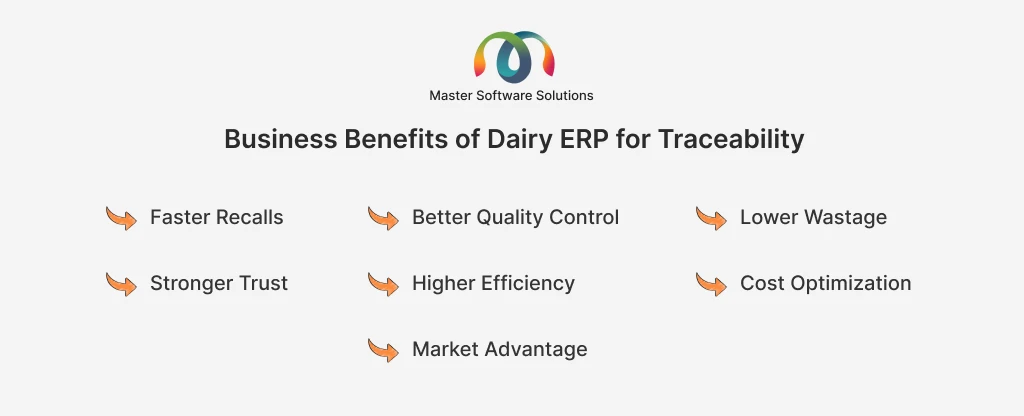
Lower wastage
Poor visibility often leads to expired or overproduced stock. A dairy ERP tracks inventory by batch and expiry date, helping teams plan better. With improved forecasting and rotation, wastage is reduced. This directly boosts margins in an industry where spoilage is a constant risk.
Stronger trust
Regulators and retailers expect quick, accurate information. A dairy ERP makes it easy to share traceability and compliance data when required. Consumers also value transparency. The ability to demonstrate control over quality and sourcing builds long-term trust and brand loyalty.
Higher efficiency
Manual tracking and reporting consume time and resources. ERP software for the dairy industry automates routine tasks and reduces duplicate work. Teams can focus on decision-making instead of data collection. This improves productivity across procurement, production, and quality functions.
Cost optimization
Better data leads to better decisions. A dairy ERP system helps identify inefficiencies, quality losses, and process gaps. Reducing recalls, wastage, and manual efforts minimizes overall operating costs. The system delivers value well beyond basic compliance needs.
Market advantage
String traceability improves readiness for new markets. Many domestic and export buyers require proof of quality and source tracking. With a dairy ERP, businesses can meet these requirements with confidence. This opens doors to new customers and growth opportunities.
Common challenges in implementing dairy ERP for traceability
Implementing a dairy ERP is a strategic move, but it is not without challenges. Many dairy businesses face operational, technical, and organizational hurdles during implementation. Understanding these challenges early helps set realistic expectations and improve project success. Here are the common dairy ERP implementation challenges for traceability.
Legacy systems
Many dairy businesses rely on old systems, spreadsheets, or manual records. These systems often store data in different formats and locations. Migrating this data into a dairy ERP can be complex. If historical data is not properly cleaned and validated, it can affect traceability.
Data migration
Data migration is more than just moving files from one system to another. It involves mapping data correctly to ERP fields such as batches, suppliers, and quality parameters. If migration is rushed or poorly planned, traceability gaps can appear from day one. Careful data validation and testing are essential for long-term success.
User adoption
Employees may be comfortable with existing processes. Introducing a new ERP system can feel disruptive and overwhelming, especially for shop-floor and field teams. Without proper training and communication, users may resist the system. Strong user adoption is critical for accurate data entry and reliable traceability.
Change management
ERP implementation often changes how teams work. Processes become more structured and data-driven, which requires a shift in mindset. Clear leadership support, role-based training, and phased rollout help teams adapt. Change management ensures that the dairy ERP is integrated into everyday operations rather than being a reporting tool.
Partner integration
Traceability does not stop at the factory gate. Farmers, collection centers, transporters, and distributors all play a role. Integrating third-party partners into the ERP ecosystem is challenging. Differences in technology readiness and data quality must be managed carefully.
Cost vs. ROI
ERP implementation requires upfront investment in software, implementation, and training. This can raise concerns, especially for cost-sensitive dairy businesses. However, the long-term returns come from reduced wastage, faster recalls, better compliance, and improved efficiency. Viewing ERP as a long-term investment rather than a cost is key.
Choosing the right dairy ERP for traceability
Not all ERP systems are built to handle the complexity of dairy operations. Choosing the right dairy ERP is critical for achieving reliable traceability, long-term compliance, and operational efficiency. The right system should fit current needs while supporting future growth. When choosing dairy ERP software for traceability, consider the following factors.
Dairy-specific fit
Generic ERP systems are designed for multiple industries and often lack features specific to the dairy industry. They may struggle with milk procurement, quality testing, yield management, and tracking shelf life. A dairy ERP is built around real dairy workflows. It understands daily milk collection, batch splitting, by-products, and perishability. This industry-specific fit ensures that traceability is accurate and easier to manage.
Growth-ready
Dairy businesses grow through higher volumes, new product lines, or expanded markets. An ERP must scale without disrupting traceability. The system should handle increasing transaction volumes, multiple plants, and complex product structures. Scalability ensures that traceability remains strong as operations expand.
Dairy expertise
ERP success depends heavily on implementation expertise. Vendors without dairy experience may not understand real operational challenges. A vendor with dairy domain knowledge can configure that system correctly from day one. This reduces customization, shortens implementation time, and improves traceability outcomes.
Strong vendor support
Traceability requirements may change due to new regulations and market demands. ERP vendors must provide regular updates to stay compliant. Reliable support ensures issues are resolved quickly. Ongoing upgrades and regulatory readiness help protect the business from future risks and disruptions.
Conclusion
Traceability has become critical for quality control, risk management, and long-term growth. Businesses that invest in the right system today are better prepared to handle audits, recalls, and changing market expectations. A dairy ERP system plays a critical role in making traceability reliable and practical. Connecting procurement, production, quality, and distribution in a single system provides businesses with complete visibility and control.
Master Software Solutions (MSS) offers tailored dairy ERP solutions. We provide end-to-end ERP implementation services, including requirement analysis, customization, data migration, integration, training, and post-implementation support. We ensure that our dairy ERP system aligns with your dairy business operations, regardless of your dairy business type.
Master Software Solutions builds custom dairy ERP solutions on proven platforms such as Odoo and Microsoft Dynamics 365. These platforms offer flexibility, scalability, and strong integration capabilities. We have customized them for dairy-specific workflows, ensuring businesses get a solution that fits their operations today and grows with them tomorrow.
If you are evaluating your traceability readiness or planning to modernize your dairy operations, get in touch with our dairy experts now.